

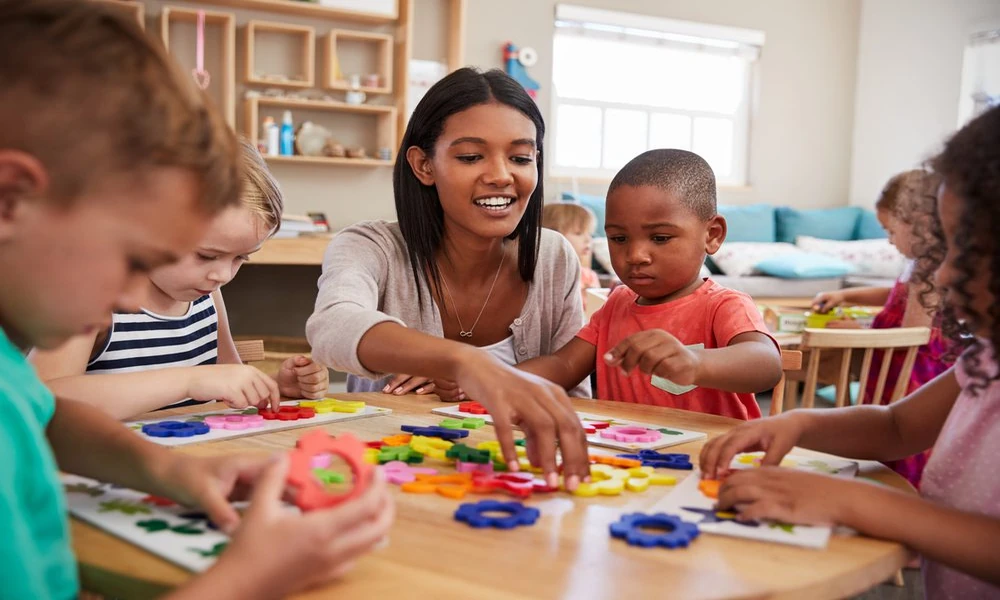
In the unique environment of a Montessori Children’s House, children aged 18 months to seven years experience a different approach to learning. Here, the teacher’s function transcends traditional instruction. Instead, they act as a guide, fostering a lifelong love for learning.
This method encourages each child to explore at their own pace, nurturing their independence and curiosity. The teacher’s presence is vital, as they create a dynamic atmosphere that supports holistic development. Every child benefits from tailored mentorship, ensuring that their social, emotional, and intellectual needs are met.
This article delves into how the teacher facilitates growth within a carefully prepared learning environment. By stepping away from conventional lecturing, they empower children to thrive and engage deeply with their educational journey.
Key Takeaways
- The teacher acts as a mentor, guiding children towards independence.
- Holistic development is a primary focus in this learning environment.
- Children explore and learn at their own individual pace.
- A dynamic atmosphere fosters curiosity and engagement.
- Social and emotional needs are integral to the educational approach.
Introduction to Montessori Teaching Philosophy
Within a Montessori Children’s House, young learners from 18 months to seven years engage in a distinctive educational journey. This approach, developed by Dr. Maria Montessori over a century ago, has significantly shaped modern educational practices worldwide.
The essence of this Montessori philosophy lies in the belief that every child has a natural inclination to learn through exploration and discovery. Unlike conventional classrooms, where information is primarily delivered from the front, Montessori educators focus on nurturing the child’s developmental process.
By honouring each child’s interests, teachers create an environment where learning becomes a rewarding experience. Dr. Maria Montessori emphasised the importance of observation, allowing educators to understand each child’s unique needs and potential for growth.
| Key Concepts | Description |
|---|---|
| Child-Centred Learning | Focuses on the individual needs and interests of each child. |
| Exploration | Encourages children to learn through hands-on experiences. |
| Observation | Teachers observe to tailor the learning experience effectively. |
| Respect for Children | Valuing children’s choices fosters independence and confidence. |
Role of the Teacher in Montessori Classrooms
In a Montessori environment, teachers adopt the essential function of facilitators. They support each child’s natural development, fostering a sense of independence. This approach encourages children to take charge of their learning experiences.
Montessori educators are keen observers. They carefully monitor each child’s interests and developmental milestones. By doing so, they tailor the learning experience to meet individual needs.
By stepping back, these teachers empower children to lead their educational journeys. This unique teacher role demands extensive training in developmental psychology. It ensures that the learning environment is responsive and nurturing.
Unlike traditional instructors, Montessori educators provide subtle guidance. This method helps children cultivate self-discipline and a genuine love for learning through purposeful work.
Guiding the Journey: Teachers as Facilitators
In a nurturing educational setting, children embark on a self-directed learning journey. Here, the montessori teacher acts as a guide, providing the right tools at the right time. This approach fosters independence, allowing children to manage their own time and tasks without constant adult direction.
Subtle guidance is a hallmark of this educational method. Educators intervene only when necessary, supporting students’ progress while respecting their autonomy. In modern montessori classrooms, each child enjoys the freedom to explore materials suited to their developmental stage.
These teachers trust in children’s ability to self-correct, nurturing a sense of independence that prepares them for future academic challenges. This dynamic relationship between teacher and child is essential for fostering a love of learning.
Creating a Prepared Environment for Independent Learning
The Montessori Children’s House provides a thoughtfully designed space that encourages exploration for children aged 18 months to seven years. This prepared learning environment meets the social and intellectual needs of young learners, allowing them to thrive.
A skilled montessori teacher arranges materials in a logical sequence, inspiring curiosity and enabling children to work at their own pace. By maintaining an orderly environment, educators help children develop the independence necessary to choose their own activities and care for their workspace.
Every object in the classroom is placed within reach, ensuring that the environment supports autonomy and purposeful exploration daily. Teachers also ensure the space remains beautiful and calm, allowing students to focus deeply on their chosen tasks without unnecessary distractions.
| Feature | Description |
|---|---|
| Prepared Environment | Designed to meet children’s social and intellectual needs. |
| Material Arrangement | Logical sequence to inspire curiosity and independence. |
| Accessibility | Objects within reach to promote autonomy. |
| Orderliness | Helps children manage their workspace effectively. |
| Aesthetic Appeal | Creates a calm atmosphere for focused learning. |
Mentorship and Emotional Growth in the Classroom
Montessori classrooms create a unique space where mentorship plays a vital role in children’s emotional development. Here, Eilmar mentors understand that fostering trust and respect is essential for nurturing the emotional well-being of each child.
Montessori teachers serve as role models, demonstrating respectful behaviour that helps children develop empathy and strong social skills. By grouping students in three-year age spans, such as 3 to 6 years, older children are encouraged to assist their younger peers.
This mentorship approach ensures that every child’s emotional needs are met, creating a supportive community where students feel safe and valued. Teachers help children navigate complex emotions by providing tools for self-regulation, which is a critical area of growth within this educational framework.
Observation and Personalised Assessment Strategies
Montessori education thrives on a foundation of continuous observation, enabling teachers to understand each child’s unique learning journey. This ongoing process provides valuable insights into the interests and strengths of every child during their daily activities.
By using these observations, montessori teachers can tailor their support to meet the unique needs of students. This ensures that education remains highly personalised and engaging. Assessment in this model focuses on the progress of each child relative to their own developmental milestones over time.
Teachers help children develop by identifying specific areas where they may need additional guidance or more challenging materials. This responsive teaching way ensures that no child is forced to move at a pace that does not match their individual readiness.
“The greatest sign of success for a teacher is to be able to say, ‘The children are now working as if I did not exist.'”
Integrating Montessori Materials for Holistic Development
Children aged 18 months to seven years engage with specially designed materials that promote holistic growth. The montessori teacher introduces iconic tools like the Pink Tower and the Moveable Alphabet, which support every child’s development.
These hands-on materials are presented in a specific sequence. This allows children to explore concepts from simple to complex at their own pace. By observing how students interact with these tools, teachers help children refine their understanding and build confidence through repeated, purposeful exploration.
Montessori educators ensure that materials are self-correcting. This empowers the child to identify and fix their own mistakes without constant teacher intervention. Such an approach fosters a deep curiosity, as children develop a sense of competence by mastering tasks independently in the classroom.
| Material | Purpose | Benefits |
|---|---|---|
| Pink Tower | Develops visual discrimination | Enhances spatial awareness and fine motor skills |
| Moveable Alphabet | Supports literacy development | Encourages phonetic understanding and writing skills |
| Knobbed Cylinders | Refines tactile perception | Promotes hand-eye coordination and concentration |
| Bead Frame | Introduces mathematical concepts | Fosters problem-solving skills and number sense |
Insights from Eilmar Montessori
Eilmar Montessori offers valuable insights into adapting teaching methods for today’s children. This approach emphasises the importance of flexibility and understanding each child’s unique needs. Unlike traditional settings, montessori educators focus on fostering a supportive learning environment.
As Eilmar Montessori experts, it is believed that teachers must remain a calm presence. This helps children develop emotional regulation and resilience. By trusting children to make choices that align with their interests, educators create a space where students feel empowered.
Fostering a love of learning is essential. Teachers help children develop the internal discipline needed to navigate the freedom within limits of the classroom. These insights confirm that the teacher’s role is to guide, not direct, ensuring that every child reaches their full potential through independent discovery.
- Eilmar Montessori provides unique insights into how the modern teacher role can be adapted to support the evolving needs of children today.
- As Eilmar Montessori experts, we believe that the teacher must remain a calm presence to help children develop emotional regulation and resilience.
- Eilmar practitioners emphasise that unlike traditional settings, the teacher must trust the child to make choices that align with their natural interests.
- By fostering a love of learning, teachers help children develop the internal discipline required to navigate the freedom within limits of the classroom.
- These insights confirm that the teacher’s role is to guide, not direct, ensuring that every child reaches their full potential through independent discovery.
Conclusion
In conclusion, the commitment of Montessori educators is vital for nurturing the holistic growth of children. By stepping away from traditional methods, they create an environment where children develop a lifelong love for learning and independence.
Through careful observation and the use of specialised materials, these teachers ensure that each child progresses at their own unique pace. This partnership fosters mutual respect and trust, creating a sense of responsibility that extends beyond the classroom.
Ultimately, the Montessori approach empowers children to become self-reliant individuals, ready to face future challenges with confidence. By embracing this philosophy, educators play a crucial role in shaping the next generation.
